

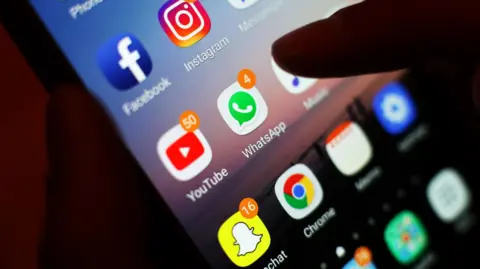
The iPhone maker could be required to permit rivals to run separate application platforms on iPhones across Britain, following a ruling from the market watchdog.
This would be a major shift to the company's infamous "walled garden" where applications can only be downloaded from the company's App Store.
But the UK competition watchdog has designated both Apple and Google as having "dominant market position" - indicating they have a lot of power over smartphone ecosystems.
Regulatory Assessment
The regulator said the two companies "may be limiting progress and market rivalry".
But the regulator emphasized it did not "find or assume misconduct" from the firms.
"Mobile applications generates 1.5% of the British economy and sustains around four hundred thousand positions, which is why it's essential these sectors work well for business," stated a top executive from the competition authority.
Around ninety to one hundred percent of UK mobile devices run on the two tech companies' operating systems, creating what the regulator calls an "effective duopoly".
Based on current data, 48.5% of British smartphone users use an iPhone - which runs the iOS operating system - with the overwhelming bulk of the remaining users using Google's Android.
Apple's Response
The regulatory probe examined how dominant Apple and Google's own applications are versus competitors - as well as their browsers and operating systems.
It is unknown what modifications the regulator will seek to implement, but earlier it published roadmaps detailing possible actions it could take.
These include mandating it to be easier for people to switch between iOS and Android phones, and for both companies to rank apps "fairly and openly" in their marketplaces.
Apple particularly may be required to permit alternative app stores on its devices, and enable people to download programs directly from companies' websites.
This would follow comparable regulations in the European Union, which previously took action against the company for anti-competitive behaviour.
Apple cautioned the UK could lose access to receiving updates - as has happened in the European Union - which the organization blames on strict rules.
For instance, some AI features which have been launched in other regions are not available in the EU.
"We faces fierce competition in every sector where we do business, and we strive continuously to create the finest offerings, solutions and user experience," the organization said in a statement.
"The UK's adoption of EU-style rules would weaken that, resulting in consumers with weaker privacy and safety, slower availability to latest functions, and a divided, more complicated user journey."
The Search Giant's Standpoint
Google device owners can presently use third-party app stores - though commentators say they are not as smooth as the company's official Play Store.
The CMA's roadmap said the search company may have to "change the user experience" of installing applications straight from websites, as well as "remove user frictions" when using alternative app stores.
"There appears to be no the justification for today's designation decision," a Google competition lead remarked.
The executive said "most" of Google device owners use alternative app stores or install applications straight from a developer's website, and asserted there is a far greater range of apps offered for Android users compared to those on Apple devices.
"Currently available are twenty-four thousand Android phone models from thirteen hundred device makers worldwide, facing intense competition from iOS in the UK," the spokesperson added.
Google's platform is an freely available software, which means developers can use and build on top of it for no cost.
The company argues this means it opens up market competition.
But advocacy organizations said restrictions on these firms' dominance in other countries "currently assist businesses to develop and giving consumers more choice".
"Their dominance is now creating genuine problems by limiting options for consumers and market rivalry for companies," commented a policy expert.


